
Your roof works hardest in the colder months, so the weeks before winter are the best time to check it over. Wind, heavy rain, frost and the occasional storm all put pressure on a roof, and small problems that seem harmless in summer can turn into expensive ones once the weather turns. The good news is that most roof issues give you warning signs first. If you know what to look for, you can sort things out early, while repairs are still simple and affordable.
Here are five common warning signs that your roof may need attention before winter arrives, split into the things you can spot inside your home and the things you can see from outside.
Internal Signs You Shouldn’t Ignore
Some of the clearest clues that your roof needs repair show up inside the house, often before anything looks wrong from the street. It is worth checking your upstairs rooms, landing and loft on a dry day so you can see what is really going on.
Damp patches are one of the most common early signs. If you notice soft, discoloured areas on ceilings or upstairs walls, water is very likely getting in from above. These patches can be small and easy to miss at first, so look closely around light fittings, in corners and where the ceiling meets the wall.
Mould tends to follow damp. Black, green or grey spotting on ceilings, walls or around windows usually means moisture is building up where it should not be. As well as pointing to a possible roof or ventilation problem, mould can affect the air quality in your home, so it is worth taking seriously rather than simply wiping away.
Staining is another sign people often overlook. Yellow, brown or tea-coloured marks on a ceiling usually show where water has been sitting, even if the area now feels dry. A stain that grows, darkens or returns after redecorating is a strong hint that the source has not been fixed.
Draughts can also tell you something. If certain rooms feel noticeably colder, or you can feel air moving near the ceiling or loft hatch, your roof may have gaps, damaged felt or missing insulation letting warmth escape and cold air in. This pushes up your heating bills and makes your home harder to keep comfortable through the winter.
If you have access to your loft, a quick look up there can be very revealing. Daylight coming through the roof, damp timber, a musty smell or wet insulation are all signs that water is finding a way in.
External Signs of Roof Damage
The outside of your roof tells its own story. You do not need to climb up to check it. A careful look from the ground, ideally with a pair of binoculars, will show you most of what you need to know. Always stay safe and never go up onto a roof yourself.
Missing or slipped tiles are easy to spot and should never be ignored. Even one gap exposes the protective layers beneath to rain and wind, and a single missing tile during a storm can quickly become several. Look for tiles that are cracked, lifting, slipping out of line or lying broken on the ground or in your garden.
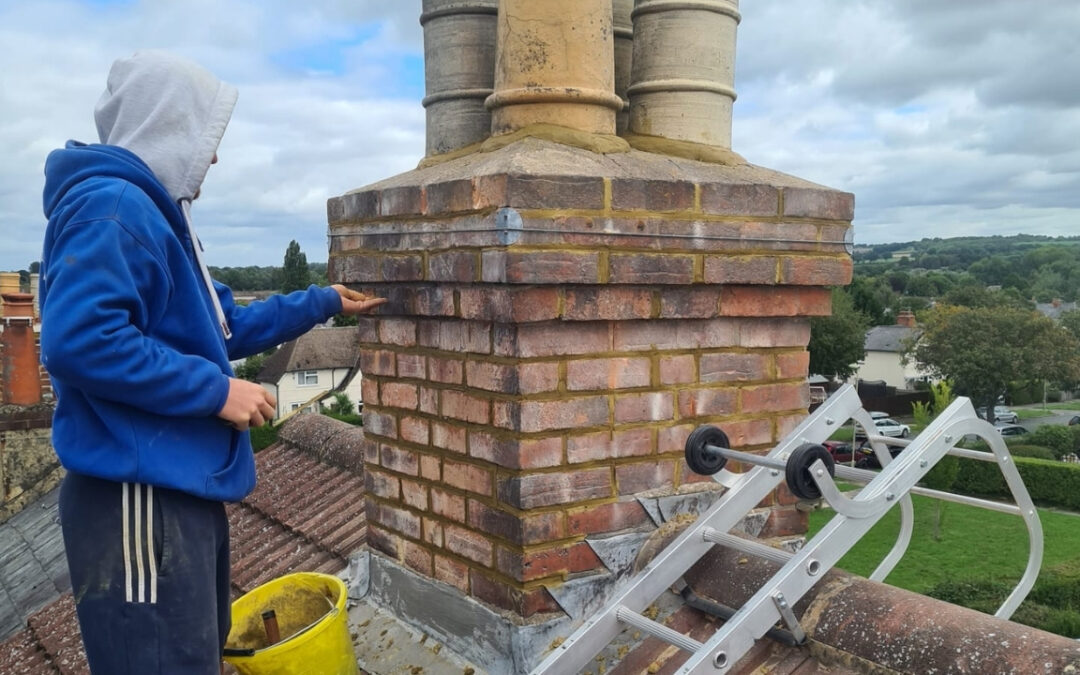
Damaged flashing is a more subtle problem but just as important. Flashing is the metal or sealed material around chimneys, vents and where different roof sections meet. When it cracks, lifts or pulls away, water gets in at exactly the points that are hardest to keep watertight. Rust, gaps or loose strips of flashing are all worth a closer look.
Gutter problems often go hand in hand with roof damage. Blocked, sagging or overflowing gutters stop rainwater draining away properly, which can force water back under the edge of the roof. If you spot granules from roof tiles collecting in your gutters, plants growing in them, or water spilling over the sides during rain, your drainage needs attention before winter.
Storm damage can appear suddenly after a spell of bad weather. High winds can lift and crack tiles, dislodge ridge caps and tear at flashing, while falling branches can cause direct damage. After any storm, it is worth doing a quick visual check so you can catch problems before the next downpour arrives.
When to Call a Roofing Professional
A few warning signs do not always mean a major repair, but they do mean it is worth getting a proper opinion. Delaying roof repairs is one of the most common reasons small issues become large ones, because water damage rarely stays in one place. Once moisture gets into timber, insulation and plaster, it can spread, rot structural beams, ruin insulation and lead to repair bills far higher than the original problem would have cost.
It is time to call a roofing professional if you notice any of the following:
- Damp patches, staining or mould that keep coming back
- Several missing, cracked or slipped tiles
- Visible damage to flashing around chimneys or vents
- Daylight or water getting into your loft
- Sagging anywhere along the roofline
- Damage after a recent storm
A qualified roofer can carry out a proper inspection, tell you what is causing the problem and explain what needs fixing first. Many will give you a clear, honest assessment so you can make a calm decision rather than rushing into unnecessary work. Booking that check before winter means any repairs can be done while the weather is still on your side, rather than during heavy rain when temporary fixes are all that is possible.
If you have spotted any of the signs above, the sensible next step is to arrange an inspection now. Catching roof problems early protects your home, keeps repair costs down and gives you one less thing to worry about once the cold weather sets in.
Frequently Asked Questions
How do I know if my roof needs repair before winter?
You can usually tell your roof needs repair by checking for a few key signs. Inside, look for damp patches, staining, mould or unexplained draughts in upstairs rooms and the loft. Outside, watch for missing or slipped tiles, damaged flashing, and blocked or overflowing gutters. If you spot any of these, especially after a storm, it is worth arranging a professional inspection before winter so problems can be fixed while the weather is still dry.
Can I check my roof myself?
Yes, you can carry out a basic check yourself safely from the ground. Use binoculars to look for missing, cracked or slipped tiles, damaged flashing and gutter problems, and check your loft on a dry day for damp, daylight or a musty smell. You should never climb onto the roof yourself, as this is dangerous. Any repairs or close-up inspections should be left to a qualified roofer.
What happens if I delay roof repairs?
Delaying roof repairs often turns a small, affordable problem into a much larger one. Water that gets in through a damaged roof can spread into timber, insulation and plaster, leading to rot, mould and structural damage that costs far more to put right. Acting early, particularly before winter, helps you avoid emergency repairs and keeps the overall cost down.
How often should a roof be inspected?
As a general guide, it is sensible to have your roof inspected roughly once a year, with the period before winter being an ideal time. You should also check it after any major storm or high winds, as these can dislodge tiles and damage flashing. Regular checks help you catch minor issues before they develop into serious leaks.
Is it worth repairing a roof or should I replace it?
This depends on the age and overall condition of your roof. A roof with isolated damage, such as a few missing tiles or worn flashing, can usually be repaired cost-effectively. A roof that is old, has widespread damage or leaks in several places may be more economical to replace. A qualified roofer can assess the condition and explain which option makes the most sense for your home.